
Life Is Good
 (Posted July 18, 2012) Hi, Bob Thomason, here. Yes, this picture is my family my son, daughter, mother, and my son’s lovely wife.
I’ve been an Entrepreneur now for over 30 years and owned and operated two different traditional businesses. Businesses that consisted of employees and expensive overhead. (see About Me for more on this)
A few years ago, I was fortunate enough to bring my business home. I no longer have to commute to a store or office. My commute is simply down the hall now.
Now it's Your turn. Yes, working from home is different for sure.
Let me help you do the same. Let me help You build the income and lifestyle that You dream of. It’s not hard if you are coachable and teachable. For more on that, click here.
In closing, flying is my passion. I’ll probably add a few posts on my flying experiences. I've had a pilot license for about 30 years and during that time I've had a lot of fun and a few experiences that weren't fun. I'll carry you through my training experiences for different ratings and share a few of my pleasure trips. I promise to keep you entertained.
I sincerely hope you enjoy it.
A Total Loss
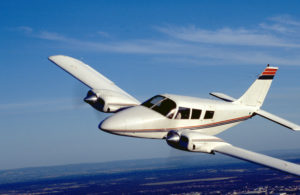
 (Posted May 24, 2011) The Piper Seneca (PA-34) was a great plain and I spent many flight hours in the plane. As I mentioned before, a twin is faster and more reliable than the single engine I started with. At least, that was my way of thinking and justifying the purchase.
The challenge in a twin, though (or for that matter any high performance plane), was to learn to stay ahead of the plane. In other words you had to think ahead. Before a landing you had to plan ahead so you would know without hesitation what to do next. I mean, you're traveling at over 100 mile per hours so things can get out-of-hand quickly if you are not prepared.
That's the reason for proficiency training. It's not a requirement for private pilots. The minimum requirement is to take a biannual flight review. That's it! Well, if you've flown any at all during that two year period, a biannual review is a breeze.
Now, I had been in several situations......especially in instrument conditions........that were not fun and required me to really pay close attention to everything that was going on. To me, a biannual review was simply not enough. I felt that I needed someone more experienced that could me put me through the paces. What if I had a real emergency? I knew that would not be the time to start trying to figure out what to do next. I needed to know! And the only way to do that was to hire someone to “drill” me.
I don't remember how I came across this fellow, but, I found someone based in Chicago that had the training I was looking for. Better still, I could have him come to me and train one-on-one.
This worked well as it built my knowledge of the plane and confidence in my abilities to fly. The guy was good. He made me sweat and earn the training.
Little did I know, though, just how important that training would be.
One Saturday evening, my mother, brother, dad and I (I wasn't married at that time) decided to take a short flight to a neighboring city and eat at the airport restaurant. There was nothing special about the restaurant. Their menu was pretty simple......hamburger, fries, and maybe a few other sandwiches. It's just the idea of getting to fly somewhere and eat out. How cool is that!
When we finished, it was getting dark but that didn't really matter as I had flow at night many times and was well familiar with the plane. As I remember, it was nice weather out and not a cloud in the sky. This should make a great trip home. There's no weather currents to make the trip less than perfect.
We all boarded the plane, taxied to the end of the runway and took off. Everything seemed normal. We got to about 300 ft and had total electrical failure. This was not good! I checked all the breakers and everything was in order but we had no electricity. Now, for those of you familiar with planes, you know that the engines run on magnetos. So, once the engines are started, electricity is not needed ........... and that's good as I didn't have any.
Dad was sitting with me up front and we were discussing what to do next. Should we chance it and fly back home or stay and try to land.
Here was the dilemma. If you remember, during the 80's there was an energy crisis going on. Therefore the runway lights at this airport we automatically turned off after a short period of time. Now, I could turn the lights on.........if I had a radio. But ALL of my electrical stuff is out. I could use my compass and the vacuum instruments. But that's it. I didn't have a hand held radio or anything to turn the runway lights on.
There was also the thought of flying back home. After all it wasn't far and would probably have taken less than 30 minutes to make the trip. The problem that kept coming to mind was “What if we got lost?” The trip is not far and I've travel that route many times, but, this was at night and there was no moon. Absolutely nothing that I could be sure I could follow. Getting lost in the air at night is not good thought at all especially without instruments.
So, I decided my best chance for surviving this trip was to try to land where I had just taken off. I had the airport in site at all times and was able to find the end of the runway by lining up with the VASI (visual slope indicator) lights. This would get me started in the right direction. However, I still was not sure what we would do once we got close to the ground. Maybe we could see at least a shadow of the ground.......I hope.
Here's where my training a few months earlier kicked in. I knew exactly what to set my controls on to get the correct rate of decent. There was no guess work there. Once everything was set, I could concentrate on finding the ground.
I remember getting close to the ground but still could not see anything. The tail started to buffet (or stall) and I knew we were close just not how close. Then I felt us hit. It was sort of like riding a rough road. When we came to a stop, my first thought was to get everyone out and get away from the plane in case of a fire. I had plenty of fuel and did not want to take a chance on being burned.
Getting my brother out was the only real challenge. The way we landed we were able to open the doors and get out ourselves but my brother was an invalid. He was born with no arms or legs, so, someone had to pick him up, put him in his wheel chair and get him away from the plane as quickly as possible which we did.
Finally everyone was safe on the ground and out of harms way. What a trip!!
And, to add insult to injury.......so to speak, a local commuter plane landed within minutes of our landing. The runway lights lit the night sky as we were walking toward the terminal.
I'm sure you can just imagine what was going through my head, now. “If I had just waited a few minutes longer..........”
As it all turned out, the plane was a total lose but we survived unharmed. No one go so much as a scratch.
The Need For Speed
(Published May 15, 2011) You would think that just owning a plane and flying when you chose (for business or pleasure) would be satisfying enough for any pilot. Not the case with me. I don't remember how the idea got started but I found myself looking for a small twin engine plane a few short years after learning to fly.
Understand, I already had a plane. One which I bought shortly after getting my private pilot license. I know I should count myself fortunate to have a plane at all. I knew many guys (and gals) who had spent many hours training and flying who didn't own a plane........of any kind. They either rented a plane (which wasn't cheap) or flew for someone else. Yet, here I was a new pilot with my own plane and not satisfied.
 You see my father and I owned a group of stores in Arkansas and Louisiana. One of these stores was about 5 ½ hours from us by car. The single engine plane made it much better as I could make the trip in about 2 ½ hours. Not bad by anyone's standards.
However, I dreamed of moving into a small twin. As I thought about it, I could just imagine that we would be safer......after all a twin means you've got a backup in case of engine failure. Although that's not exactly true, it sounds good and helped me justify it in my mind. Also felt like I could get there a little faster and that would certainly help.
Now, that part is true. The single cruised at about 110 to 120 knots while my first twin (Piper Seneca I) would cruse at about 140 knots. In actuality there was only significant time gain if the trip was long enough. Didn't matter, though, I wanted a twin.
Didn't take much shopping before I found one. But, there was one slight problem. I had a pilot license with and Instrument rating........but no twin rating. You can't simply jump from one type to another and start flying. You've got to get a rating. That requires more training and a check ride.
As I remember it, we made the deal on Friday and by Monday morning I had enlisted the services of a twin instructor in a neighboring town to get the training out of the way. Getting a twin rating only required 20 more hours of training and passing a check ride. However, my insurance saw things a little differently. I had to get my rating plus an additional 10 hours of solo flight before I was allow to carry passengers. Argh......another hurdle.
Here's how things went. I started on Monday. Flew every afternoon that week and flew to town about an hour away to take my check ride with a qualified instructor. Then, over the weekend, I flew to New Orleans Lake Front (about 5 hours round tripe) and then on Sunday I flew to Corpus Christi (another 5 hours).
By Monday morning of the following week I had my rating, additional flight time, and was ready for business. Wow! What a ride. This amount of learning is challenging and fun.